
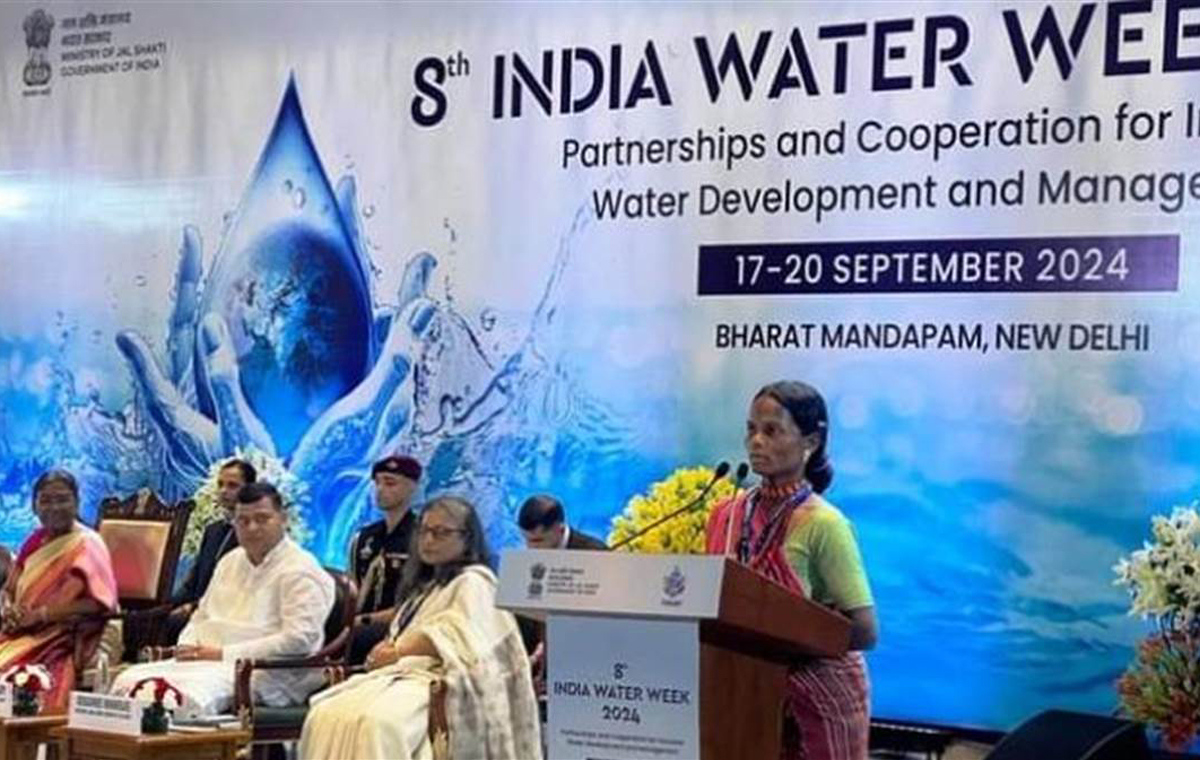
internation wash confrence 2026 banner


We appreciate your interest! Abstract paper registration for IWC-2026 is now closed.
Topics of Interest:
vision

Vision

To unite global and regional stakeholders in the Water, Sanitation, and Hygiene (WASH) sector to share innovations, progress, strengthen partnerships, and catalyse action toward achieving Sustainable Development Goal 6 (SDG 6) - Clean Water and Sanitation for All...

Call for Papers & Topics of Interest

png

Submission Invitation: India International WASH Conference 2026 invites submissions from implementing agencies, researchers, scholars, practitioners, aers.

png

Key Focus: Papers should address critical issues in water management, conservation, and sustainability, promoting interdisciplinary dialogue and collaboration for the equitable and efficient utilization of water resources.

png

Topics of Interest: Submissions are encouraged on the following topics, although not limited to:

  • API-Based Ecosystem for Multi-Sectoral Applications
  • Asset Management
  • Capacity Building and Local Technology Innovation Ecosystems
  • Climatic Adaptations
  • Community Participation and Social Governance Mechanisms
  • Demand-side management in rural water supply
  • Demand-side management in rural water supply and Water supply management models
  • Designing for Local Maintainability and Spare Parts Access
  • Digital Engagement and Youth Participation to Strengthen Rural Sanitation Outcomes
  • Digital technology for Water Supply management and Monitoring
  • Economic Valuation of Rural Water Assets and Services
  • Emerging Contaminants
  • Engaging Youth and Academic Institutions in Rural Sanitation
  • Financing and System Strengthening (through PPPs, Costing Tools, and O&M Sustainability)
  • Gender-Responsive WASH: Indicators, Impact and Policy Lessons
  • Global Best Practices in Low-Cost Water Treatment Technologies
  • Global Practices in DPI and adaptation to Indian Water Sector
  • Innovative Economic Models for Rural WASH and Community Sustainability
  • Institutional Capacity for Using DPI and DSS
  • Institutional Roles and Accountability in Rural Water Supply
  • Integration of Wastewater and Drainage Systems into Water Supply DPI
  • Integration of Water Supply Management into Formal Education
  • Learning from India & the World: Global Best Practices & Challenges in Rural Sanitation
  • Leveraging digital platform and data assisted DSS
  • Models for DTU/TSU Expertise Provision in Rural Water Supply
  • Nature-Based Solutions for Water Security (Wetlands, recharge zones, watershed restoration)
  • Operation & Maintenance
  • Operation & Maintenance including Governance Models, Regulation, Tariff Design, and Financial Sustainability
  • Operations and Maintenance Optimization Using DPI
  • Participatory Planning and Technical Demand Articulation
  • Role of Emerging Technologies in the data base management and monitoring for Rural Sanitation
  • Role of Other Sectors and Startups in Public Water Systems
  • Scaling Behavior Change Beyond ODF: ODF Plus & ODF Plus Plus
  • Scope of Water Sector Data Layers under DPI
  • Sludge and Septage Management (FSM) in Rural and Small Town Contexts
  • Source sustainability of PWS Schemes
  • South–South Cooperation and Knowledge Exchange
  • Sustaining Water Supply and Sanitation through Community-Led Local Governance
  • Techno-Economic Models for Water Treatment and Cost Recovery
  • Use of AI in O&M and Rural Piped Water Supply Schemes
  • Water Infrastructure Protection and Asset Management
  • Water Quality Management
  • Water safety and security
  • Any Other Related Topic