
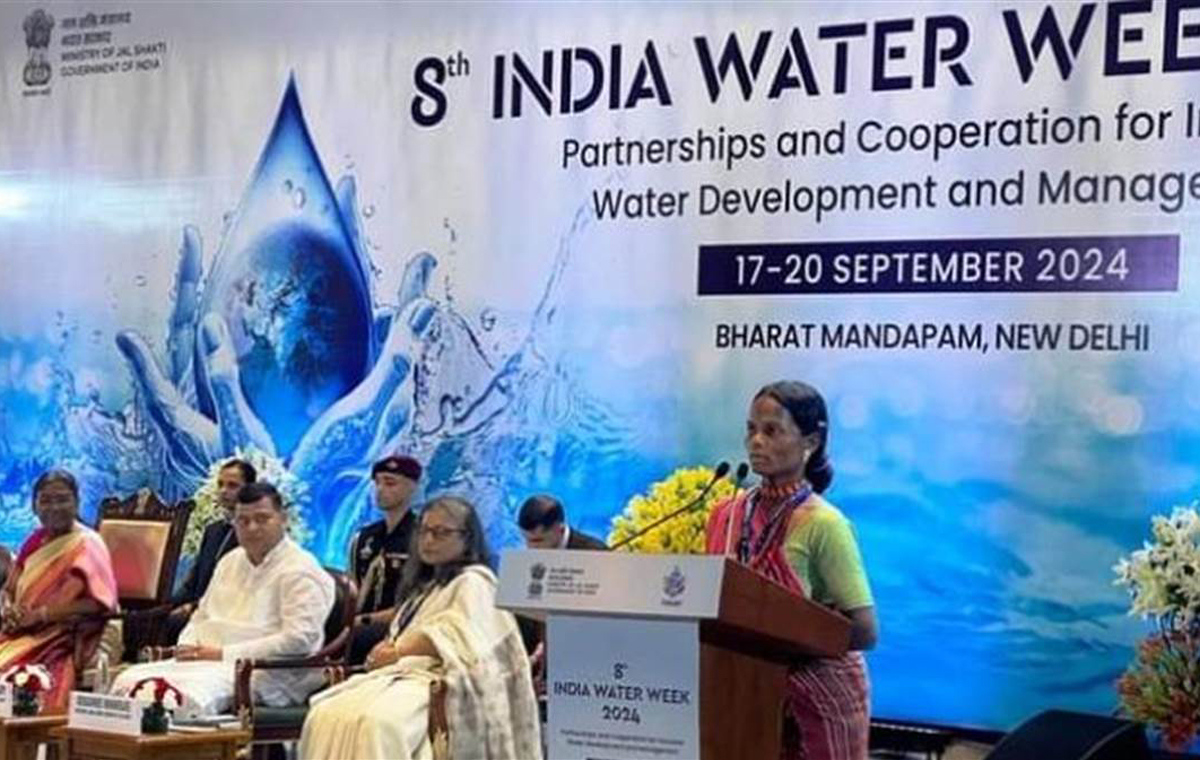
internation wash confrence 2026 banner
vision

Vision

To unite global and regional stakeholders in the Water, Sanitation, and Hygiene (WASH) sector to share innovations, progress, strengthen partnerships, and catalyse action toward achieving Sustainable Development Goal 6 (SDG 6) - Clean Water and Sanitation for All...

Call for Papers & Topics of Interest

png

Submission Invitation: The International WASH Conference 2026 invites submissions from implementing agencies, researchers, scholars, practitioners, aers.

png

Key Focus: Papers should address critical issues in water management, conservation, and sustainability, promoting interdisciplinary dialogue and collaboration for the equitable and efficient utilization of water resources.

png

Topics of Interest: Submissions are encouraged on the following topics, although not limited to:

  • API-Based Ecosystem for Multi-Sectoral Applications
  • Asset Management
  • Capacity Building and Local Technology Innovation Ecosystems
  • Climatic Adaptations
  • Community Participation and Social Governance Mechanisms
  • Demand-side management in rural water supply
  • Demand-side management in rural water supply and Water supply management models
  • Designing for Local Maintainability and Spare Parts Access
  • Digital Engagement and Youth Participation to Strengthen Rural Sanitation Outcomes
  • Digital technology for Water Supply management and Monitoring
  • Economic Valuation of Rural Water Assets and Services
  • Emerging Contaminants
  • Engaging Youth and Academic Institutions in Rural Sanitation
  • Financing and System Strengthening (through PPPs, Costing Tools, and O&M Sustainability)
  • Gender-Responsive WASH: Indicators, Impact and Policy Lessons
  • Global Best Practices in Low-Cost Water Treatment Technologies
  • Global Practices in DPI and adaptation to Indian Water Sector
  • Innovative Economic Models for Rural WASH and Community Sustainability
  • Institutional Capacity for Using DPI and DSS
  • Institutional Roles and Accountability in Rural Water Supply
  • Integration of Wastewater and Drainage Systems into Water Supply DPI
  • Integration of Water Supply Management into Formal Education
  • Learning from India & the World: Global Best Practices & Challenges in Rural Sanitation
  • Leveraging digital platform and data assisted DSS
  • Models for DTU/TSU Expertise Provision in Rural Water Supply
  • Nature-Based Solutions for Water Security (Wetlands, recharge zones, watershed restoration)
  • Operation & Maintenance
  • Operation & Maintenance including Governance Models, Regulation, Tariff Design, and Financial Sustainability
  • Operations and Maintenance Optimization Using DPI
  • Participatory Planning and Technical Demand Articulation
  • Role of Emerging Technologies in the data base management and monitoring for Rural Sanitation
  • Role of Other Sectors and Startups in Public Water Systems
  • Scaling Behavior Change Beyond ODF: ODF Plus & ODF Plus Plus
  • Scope of Water Sector Data Layers under DPI
  • Sludge and Septage Management (FSM) in Rural and Small Town Contexts
  • Source sustainability of PWS Schemes
  • South–South Cooperation and Knowledge Exchange
  • Sustaining Water Supply and Sanitation through Community-Led Local Governance
  • Techno-Economic Models for Water Treatment and Cost Recovery
  • Use of AI in O&M and Rural Piped Water Supply Schemes
  • Water Infrastructure Protection and Asset Management
  • Water Quality Management
  • Water safety and security
  • Any Other Related Topic